
Hind Gut Ulceration

The horses hind gut is full of a stable mix of organisms. During conditions of change, this delicately balanced population can become disturbed. This change in environment can promote the growth of bacteria that produce acid. This acid damages the lining of the hind gut and causes ulceration.

Hind gut ulceration causes pain and irritability and also mild colic signs. It often presents as a negative behavioural change at times when grass growth is at its peak. Rarely, this condition can become severe and your horse can develop diarrhoea, and severe sickness.

The most common causes:

A change in diet which is often associated with the changing grass each season

Breaking into a feed room and over-eating, especially grain based feeds

A primary bacterial infection but this is most commonly associated with stress or dietary change and is less common but more life threatening

Emergence of worm larvae causing physical damage to the lining of the hind gut

Prevention:

Ensure dietary change is SLOW, this includes changes in grass. Be proactive!!

Using ‘Equishure’ to help minimise the change in acidity to the hind gut

Treatment:

Management/nutritional change which would be assessed at the time

Sucralfate: EXCITING NEWS!! We have a licensed horse product now which makes it more affordable. As well as helping to heal gastric ulceration, it is hopeful that it will coat the ulcer bed in the hind gut and promote a better environment for ulcer healing.

Medications: There are other medications however many are not available in NZ currently

Oil: The addition of some oils such as Rice Bran oil may have a positive effect on hind gut healing

If your horse may be suffering some of these signs, get in touch so we can help. Look out for next weeks post. Please comment if you have any requests for topics!!

Can my horse graze sprayed pastures??

Ok so this is the million dollar question that needs to be answered with a million questions.

Which herbicide has been used?

How old is your horse, is it a pregnant mare?

How much grass did your horse eat?

When was the exposure?

There are many herbicides on the market, but each herbicide will have instructions for grazing withholding.

My first point is, that these studies are mostly done on farm animals, and we group horses into this catergory. There are not many studies specifically performed for horses. This potentially means it affects them differently.

In addition, the active drug can be researched but once the drug is compounded into a product, it can have different effects on the horses system.

The next important point to make, is that most acute toxicities are found from incorrect use of the product or expose directly to the product either from spillage or access to a storage shed. Less commonly from grazing the pasture during the withholding time.

Acute signs of toxicity commonly involve gastrointestinal disturbance such as colic or diarrhoea, however the clinical signs are very similar to other diseases. This means the history of exposure is very important.

Chronic exposure can also cause disease. This means, over a period of time the horse is exposed to consistently low levels. There is research currently being performed into some of the potential long term effects. One of the diseases highlighted is equine metabolic syndrome. I fine this particularly interesting as many of our patients with this disease commonly live on permanently sprayed paddocks. I have no answer here, other than to say, currently we don’t have a lot of information. Important point: Access to grass for an EMS patient is much more life threatening due to laminitis risk than the concern of chronic exposure.

I would also like to make the point that chronic exposure for horses is still being investigated, but a whole list of diseases related to poor performance have been hypothesised.

Conclusion;

I would recommend looking after paddocks to ensure weeds don’t take over. This would include avoiding drought and flooding where possible, avoid over-grazing the grass, and fertilise where possible which natural products.

If you do need to graze paddocks that have been sprayed, then stick to the manufactures recommended withholding, and provide suitable drinking water rather than run-off water from heavily farmed blocks.

If your horse has had access to a recently sprayed paddock, then remove them straight away, provide them with a product to promote good gastrointestinal microbial balance, and monitor for any signs that are concerning.

I hope one day to be able to provide you with more scientific research. For now please continue to ponder my thoughts

Corpora Nigra In Horse Eyes

A translation for Corpora Nigra is ‘black body’.

These are small dark enlargements most commonly found on the dorsal pupillary border (top bit of the pupil).

Their job is considered to be shading the retina from sunlight when the pupil is small on bright sunny days. We simply wear sunglasses ☺️

Occasionally these can become enlarged due to fluid production inside. We then call them iris cysts. Mostly these are of no concern. The Corora Nigra can occasionally be large in size or number and affect vision. They are an uncommon cause of ‘spookiness’ or behavioural changes.

 An important growth to rule out however, is ocular (eye) melanoma. These tend to occur on an area of the iris which is not the pupil border. These are dangerous as they can be invasive and cause detrimental damage to the eye resulting in vision loss and pain.

 If you are concerned, an ocular examination by the vet should help with the initial diagnosis, but ultrasound can also be used to help determine which structure is present. Ultrasound of the eye is a relatively simple process and can provide vital information to assist a diagnosis.

 Next time you go to see your horse, have a look at these amazing structures. If you get to know what is normal for your horse, you will quickly be alerted when something changes.

Are flies a nuisance or a help?

I am writing a very brief post this week, but also a very important one. My clients regular comment that maggots are a good thing for wounds as they only eat the unhealthy tissue. This is not true.

The modern flies have a life cycle of egg-maggot-fly-egg. The modern species of maggot will eat healthy tissue as well as dead flesh. This is really important to know, as wounds must be covered from fly attack.

We can purchase sterile maggots that are a special species and they only eat healthy tissue. They can be ordered from a company and arrive wriggling in the post he he These maggots can be really helpful in chronically infected wounds. However, please note, they are a species specifically bred for this purpose and are not the maggot of the common fly!!

Two ways to protect wounds from fly attacks is to bandage, or to use a fly repellant that can be used adjacent to wounds, or some can be used on wounds. In addition, keeping wounds clean and free from infection also helps!

Buying or Selling a Horse/Pony?

A Pre-Purchase examination is a complete health assessment including a lameness evaluation to ensure the horse or pony that you are wanting to purchase will SUIT YOUR athletic requirements. This should be a personalised examination tailored to your requirements following a consultation with the performing Veterinarian


I do hear many clients and experienced horse people say ‘I DO NOT NEED ONE’, mostly because they have brought many horses and never had an issue. I would like to give my professional opinion on this and comment, ‘YOU HAVE SIMPLY BEEN LUCKY’.

In my every day work I see my clients spend a lot of money of treating problems that horses arrived with. Some of these issues cannot be fixed, only managed at marked cost to the new owner. Without a Pre-Purchase examination, you are also unlikely to be able to get your money back during a disputes tribunal (I have seen them go both ways).


This article is a little guide as to the pro’s of having a pre-purchase examination:

It is a legally binding document that owners sign to declare any previous known health history: TIP If you are purchasing the horse through an agent, you MUST also request the owner to sign the disclosure

It protects the SELLER: Many sellers are taken to the disputes court because the pony arrived and it wasn’t behaving as advertised or is lame. A Pre-Purchase Examination protects the seller here.

It is NOT a PASS OR FAIL examination: It simply highlights any abnormalities, and provides the purchaser with a risk profile of purchasing the horse for likely future veterinary intervention or clinical disease

FLEXION TESTS: Can be positive or negative and the horse is still suitable for purchase. It is about taking into account the whole picture including age, riding history, flexion test symmetry and clinical examination.

Purchase Price: Buying a cheaper horse should not be a reason to avoid a pre-purchase examination. Many horses purchased for $1000 have cost 2-3 times in veterinary bills.

Veterinarian: They should be LICENSED TO PERFORM pre-purchase examinations. They should also as mentioned above, tailor the pre-purchase based on your individual needs!! Not all vets are licensed for this procedure.

Corpora Nigra In Horse Eyes

A translation for Corpora Nigra is ‘black body’.

These are small dark enlargements most commonly found on the dorsal pupillary border (top bit of the pupil).

Their job is considered to be shading the retina from sunlight when the pupil is small on bright sunny days. We simply wear sunglasses ☺️

Occasionally these can become enlarged due to fluid production inside. We then call them iris cysts. Mostly these are of no concern. The Corora Nigra can occasionally be large in size or number and affect vision. They are an uncommon cause of ‘spookiness’ or behavioural changes.

An important growth to rule out however, is ocular (eye) melanoma. These tend to occur on an area of the iris which is not the pupil border. These are dangerous as they can be invasive and cause detrimental damage to the eye resulting in vision loss and pain.

 If you are concerned, an ocular examination by the vet should help with the initial diagnosis, but ultrasound can also be used to help determine which structure is present. Ultrasound of the eye is a relatively simple process and can provide vital information to assist a diagnosis.

Next time you go to see your horse, have a look at these amazing structures. If you get to know what is normal for your horse, you will quickly be alerted when something changes.

Eyes….a common reason for a call out.

Winter is finally over. The grass is growing and a lot of horse owners are starting to cut back on hay to ensure our horses do not put on too much weight in the spring.

This time of year we need to be mindful that horses are starting to push fences for new grass. Recently for this reason, we have seen a higher incidence of eye emergencies.

Trauma to a horses eye is often an emergency. Corneal trauma is slow to heal and is at high risk of infection. Always have the eye checked and start required treatment as soon as possible.

This little pony had a puncture wound to the soft tissues of the eye. They were so inflamed they were protruding outside of the eye lids.

To treat this we used the eye lids as a bandage for a short period by stitching the eye closed. This allowed the soft tissue inflammation to reduce, and once the sutures were removed. The eye was healed perfectly.

Why horses cannot vomit

Horses have 3 anatomical mechanisms designed to assist in continual movement of food through the digestive tract. These mechanisms prevent the back flow of food from the stomach to the mouth, hence they cannot vomit.

1: The waves that move the food through the oesophagus (food pipe) from the mouth to the stomach move in one direction only unlike other species such as humans

2: The junction at the opening of the stomach is called the cardiac sphincter. This is a very strong band which closes after food is pushed into the stomach. This acts as a very efficient one way valve.

3: Lastly, the food pipe enters the stomach at a very steep angle so if the stomach becomes full/distended, it pushes back on this sphincter and closes it tighter.

 Why are these facts important. Because horses cannot vomit, if the stomach becomes distended when the horse is unwell, normally during a colic episode, the stomach is at serious risk from rupture/popping. This is why when a horse shows signs of colic, it is very common to pass a tube to ensure the stomach isn’t over-full with gas or liquid.

During a choking episode (when food gets stuck in the food pipe), food can be seen being expelled from both nostrils along with mucous and foam. This is not vomiting.

If you believe your horse is vomiting then this is very serious and you need a vets assistance immediately!!

Don’t eat too much this weekend, we have a 2 way system

Bleeding wounds

How much blood does a horse have?

It is breed dependant but approx 6-10% of their body weight (30-50L)

How much blood can a horse lose before it is damaging to their health?

A horse can lose approx 6L of blood safely.

If 6-12L is lost, horses can often manage without blood transfusion if appropriate care is given.

Beware of the small wound:

Last week we saw a healthy 450kg mare that had a very small cut on her RH leg. Unfortunately it had lacerated a small artery approx 5mm in diameter. The amount of blood loss had not been apparent until the next day.

She presented with signs of shock due to her marked blood loss. She needed immediate help.

She had an elevated heart rate which was compensating her reduced blood pressure to allow her vital organs to stay healthy.

This mare was lucky that her reduced blood pressure had stopped her bleeding otherwise she may not be with us today. If the artery had been larger it would likely have continued to bleed.

Her normal blood concentration with red blood cells is approx 40%. This mare lost so much blood that it was only 22%.

She received fluids to expand her blood volume artificially, these are called colloids. The leg was bandaged to prevent further bleeding, and she is now recovering really well and should make a full recovery.

Please see my photos attached for an insight into calculating blood cells in the body.

Hot or Cold therapy? Which one to pick…

There are many ways we can assist our horses either following an injury or on a daily basis to make them feel better or to enhance performance. But what is the science behind the hot and cold therapy options we have?

Here are some simple facts:

Cryotherapy (cold therapy):

Reduced pain, swelling and inflammation after initial injury and it is useful for chronic conditions.

It can penetrate tissues 1-4cm deep.

Aim is to reduce tissue temperatures to 15-19 degrees.

It must NOT be lower than 10 degrees otherwise you can get tissue damage.

Temperature to 0 degrees can act to block feeling in legs and is prohibited at FEI events.

Dose:

15-20 minutes every 2-3 hours, especially helpful in the first 3 days

In more chronic conditions, treat for 15 minutes post exercise

Heat therapy:

The aim is to increase the joint range of motion and the extensibility of joints

It reduces muscles spasms, pain and muscle tension

Dose:

10-15 minutes prior to stretching

Have a lovely weekend

Show Hood Disasters

Here is a little post to warn you all of the risks with the full hoods to protect the hair coat and the mane pre-show.

I have seen many disasters with show hoods. Yes they are used commonly without a problem... BUT... they do go wrong. So please be mindful if you are using them.

This poor pony’s hood slipped and sat on the cornea to rub it raw overnight, causing a large ulcer. The pony also then became caught up in the fence, luckily with no skin trauma.

Attached is a photo of a lavage system which was surgically placed in the eye to allow administration of antibiotics safely from the level of the wither. We do this when ponies refuse to allow topical medications to the eye. This poor pony needed 8 weeks of treatment to allow this eye to heal.


Hay Shortage This Winter

Many of my clients are concerned that they are short of hay this winter. I have put together a little summary to help if you need to ration your hay this winter.

Our horses would naturally eat 1.5-2% of their body weight (10kg for a 500kg horse) in long fibre (hay or grass)per day.

However for health and maintenance of the teeth and gastro intestinal tract, our horses can cope with 1%. 1% would be 5Kg for a 500kg horse which equates to 2.5-3 slices of a normal bale of hay. Weighing it is a great idea so that you can be sure to meet this very MINIMUM requirement.

If you do need do reduce hay intake temporarily, you MUST replace the rest of their dietary requirements in the short term until we have some grass to graze or access to more hay.

For a 500kg horse we are looking at replacing 3-5Kg dry weight of fibre.

Replacement fibre sources for your hay in the short term:

Chaff (but be mindful it doesnt weigh very much)

Haylage products such as fibre fresh range

Then additional fibre can be found in:

Speedybeet

Maxisoy

Fibre pellets

And many other options.

Always monitor for weight loss or weight gain when replacing your hay with alternative sources.

Other hard feed options are suitable for replacing some of the hay, however please remember most feeds you buy in a bag from the store have very minimal fibre content.

Good luck with your hay hunting 🥰

Why is Horse Sweat Foamy?

Most mammals sweat to allow evaporative heat loss. 

Horses are extra special!!

When horses sweat you can often see a lather or foamy consistency to it. This is due to a product called ‘LATHERIN’ which horses produce unlike humans (thank heavens!!).

The latherin reduces the surface tension of the water in the sweat and assists the moisture in moving away from the skin to the surface of the horses coat. This improves evaporation and cooling. This is extremely important in horses as they need to lose a large amount of heat which is produced during exercise from their large muscles.


Antibiotic Use In Horses

There are many times when antibiotics are needed to save a horses life.

In this blog I wanted to remind you all of times when antibiotics can TAKE a horses LIFE.

The horses hind gut is a complex mix of microbiota which includes Bacteria, Protozoa, Fungi and Yeasts. Many things can disturb the very importance balance of these organisms. The most common causes are fast changes in feed, which can include grass as well as hard feed, infection with bad bacteria such as salmonella, but most importantly our antibiotic usage.


Every time a horse is administered antibiotics, it will upset the delicate balance of microorganisms in the hind gut. This usually happens at a very low level and the hind gut can still function correctly. If the antibiotics kill enough of the ‘good bacteria’, it changes the way the microorganisms ferment food, and converts the hind gut into a state of promoting ‘bad bacteria’. As a result, there is release of damaging substances and eventually we see sever ulceration of the hind gut walls. This ulceration causes pain, the horses feel unwell, and often present with diarrhoea.  As this ulceration worsens, bacteria can move across into the blood stream and cause septicaemia which has a very high mortality rate.


I wanted to remind you all of this today, because I commonly am requested for antibiotics for small local skin infections, or as a preventative for injection when a horse sustains an injury.

Often these antibiotics are warranted. However, EVERY SINGLE time we use antibiotics in our horses we must balance the risk of giving them versus the very real but thankfully rare, life threatening risk of using them.

Let’s not forget topical antibiotics, washing with antiseptics, and early recognition of problems being the key to reducing the need for using them.

I hope you found this a useful reminder.


Barley Grass

Commonly I have attend clients horses with veterinary related issues associated with eating barley grass seeds. The hay was purchased, unknowingly, with large amounts of barley grass seeds within it. Is this a problem?

From a nutritional aspect there are no negative effects of eating the barley grass seeds.

However, from a traumatic point of view, there are many risks.

The seed of the barley grass, when dried, can be very sharp. It is also a seed that sticks to objects easily due to its specially designed shape. It works its way into the body through soft tissues, mostly of the mouth in horses. If the seed head is not removed, it continues to progress through the tissues and in some cases the entry hole closes over. At this point it will act like a foreign body and form a discharging draining tract, or it can continue to migrate and cause severe disease.

Please check your hay thoroughly, and ideally examine a few bales prior to purchase.

One of my well experienced barley grass clients, explained a simple method to detect the seed heads in the hay:

Step one:

Select your husband or male friends favourite PGG sweater and put it on

Step 2:

Select a handful of hay and rub it up and down on the jumper over the stomach area

Step 3:

Examine for barley grass seed heads

Step 4:

Take off the sweater swiftly return it to its place of residence 


My Horses Urine is Red

There are lots of bad reasons why a horses urine is red. It can mean there is blood present, breakdown products from muscle, or even due to toxicity. However, one very common reason is due to a pigment called pyrocatechin.

Pyrocatechin is a break down product of plants and is commonly found in horse urine. When a horse urinates the pyrocatechin present in the urine contacts oxygen in the air and it turns red or orange in colour.

The staining is commonly seen on white hair on the back legs of mares, or sometimes clients report noticing the concrete pad at a tie up has turned red the next day.

If you see a horse urinating and it’s is a different colour to yellow then this is abnormal. However, if you see urine on the floor or urine staining on the hair coat change colour after a time period, then this is just due to science and nothing to worry about.


Feeding the Old Thin Horse

Nutritional plan pre-winter: Feeding the older horse

Firstly I want to comment on this picture. This horse is late 20’s and very skinny, however she is being very well cared for and is being fed lots of hay. My lovely client was anxious about her weight and was trying many different feed options to improve weight, before asking for my help. This post is designed to educate and help my clients. I do see older horses like this quite commonly. Firstly, satiety or the feeling of fullness, we believe is related to factors released and absorbed in the blood stream following production of VFA’s from the hind gut. These VFA’s are released when fibre is digested. This is why fibre in the diet is so important as it prevents our horses ‘feeling’ hungry, All that has gone wrong with this mare in the above picture, is that a nutritional plan was needed a few years earlier. Why do I say this? Well because with our older horses, the key is PREVENTION of loss of topline and weight loss. Once an older horses loses topline, it is very hard to reproduce it. Remember these horses are retired, often on flat paddocks, where little musclar development is required.

Before a nutritional plan can me made, I need to perform a dental evaluation. Some older horses have ‘overworn’ or ‘aged’ teeth, meaning their feed conversion efficiency when chewing is less. Even a 20% reduction in the digestibility of the food from grinding of the teeth, over time, causing a dramatic deficit in calories. For this reason, in older horses with aged teeth, we need to look at more easily digestible fibres, including super fibres, to assist in the daily nutritional requirement.

Following a full health examination I will help to devise a plan based on both:

  • Fibre type

  • Bucket feeding options

The nutritional plan needs to be individual depending on the horses needs.

Fibre type: There are many options available including lucerne hay, good quality meadow hay (lower fibre and more digestible hay is often softer to touch), and also haylage options for some horses. Additional fibre can be added to the diet as super fibres. Super fibres are processed fibres such as haylage products (fibre pro/meadow pro), beet products and chaff. The energy available per Kg is often greater and the energy is more readily available to the horse as less chewing is required.

Bucket feed: Historically many people have fed boiled barley over the winter. This option is ok for some horses, but we have better feeds available for purchase now, that are better suitable for older horses that need calories and topline. Examples are those that are high fat and high protein. This conversation probably needs to be on an individual horses basis. However, I have one tip for you: The digestible energy and protein content of a feed is written on the back of a bag. This DOES NOT always convert to availability to the horse. The processing of a feed has a large effect on whether the horse can actually receive the energy and protein available.

Prevention of weight loss is key. Winter is a very hard time to put weight on our older horses.

I hope this post helps!

Injuries to the facial bones

Facial bone fractures are a relatively common injury.

They usually result from a horse hitting their head on a float, or a kick from another horse.

There are many bones of the face of the horse, but the most commonly injured would be the following:

Nasal bone 

Maxillary bone 

In these two areas of the skull, the skin covers the underlying bone with minimal soft tissues between. This leaves them without much protection from external forces.

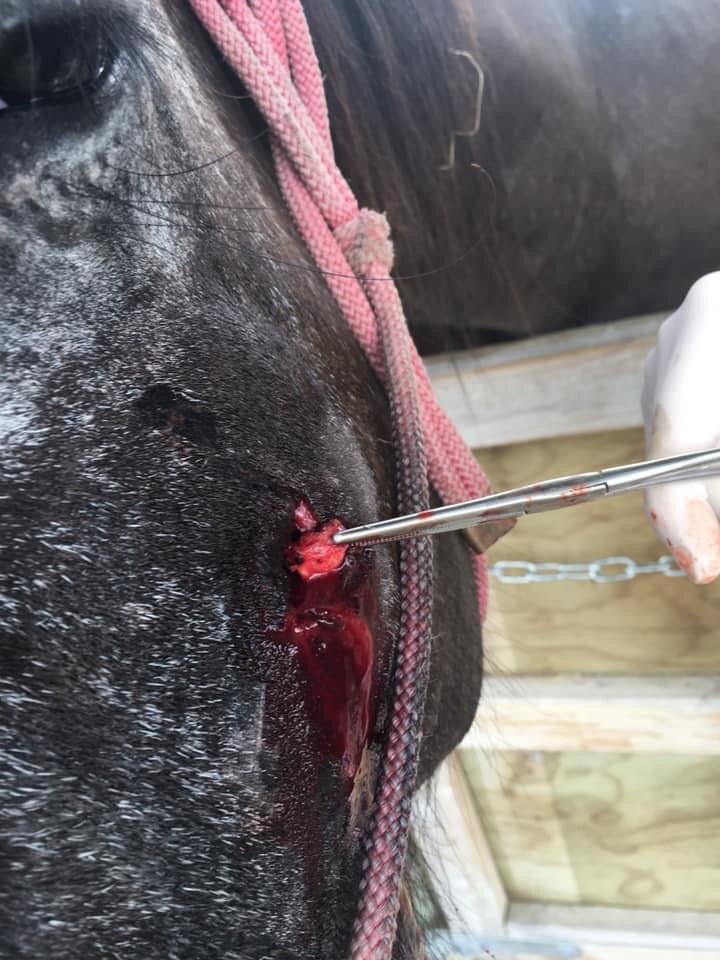
When these bones are broken, then skin is often cut open aswell. Sometimes you might hear or feel air moving through the skin hole. This is because underneath the nasal bones are the nasal cavities, and underneath the maxillary bones are the maxillary sinuses which for interest only, are divided into compartments.

Within the maxillary sinus you will find the roots, or more correctly, the apices and reserve crown of the cheek teeth. These teeth erupt down into the mouth throughout the horses life, so in an old horse you would find minimal amount of tooth roots in the sinus compared to younger horses.

When an injury occurs to these areas of the skull, it is important to investigate the extent of the injury, and to ensure that air flow through the nasal cavity had not been compromised. The wound should be investigated for bone fragments or damage to the teeth.  It is vital to prevent infection whenever there is bony involvement in a traumatic wound, and to ensure swelling doesn’t compromise air flow through the nostril.

Quite often, the wound itself is small, but the underlying damage can be more extensive.

Please see some photos of a horse I recently saw for a small wound on the face. The alert for my client, was when they could hear some air moving in and out of the wound.

The horse was put on preventative antibiotics, and under sedation, the bone fragments were removed and the wound was debrided and sutured. He recovered very Weill.

Have a look and let me know if you have any questions.

Have a fantastic weekend at omakau show everyone. I hope those that entered the class we sponsored enjoyable.


IMG_2044.JPG
IMG_2046.JPG
IMG_2049.JPG
IMG_2050.JPG

Common horse cold

The common horse cold can be caused by many possible viruses in NZ. The top viral causes would be a Herpes Virus, or less likely an Adenovirus or Rhinovirus.

These viruses rarely cause serious disease in horses, however do cause a serious headache for their owners. The problem these viruses cause is coughing, which can be present for a long period of time, or they can cause a secondary infection. Both of these scenarios result in time lost riding and competing.

In Central Otago we appear to be having a viral recurrence with approximately 8 months in between local outbreaks when observed over the last 2.5 years.

The exact cause of your horses cold symptoms is often not diagnosed. This is because of costs associated with diagnosis, and also because most horses will recover quickly with the correct medical management. 

Please DO NOT panic. Instead, can we please remember our hygiene practices:

  • Do not allow nose-nose contact between horses from different properties

  • Only handle your own horse and stay clear of other horses when out competing

  • Remember grooming kits are a great way of spreading viruses

  • Provide clean air environments for our horses when out competing; yards are better than stables. Better still are small paddocks

  • Allowing breaks when travelling to give horses time to graze grass will improve drainage of respiratory secretions and reduce compromise to the respiratory system

  • Hay steamers are fantastic for promoting respiratory health. Alternatively if horses are sick then soaking hay to swell dust particles does work well

  • Keep your Herpes Vaccinations up to date


Fungal keratomas horse ears

Ok so the long standing questions….. what are the lumps at the tip of my horses ears??

A number of horses present with lumps at the tips of the ears, which as vets we call nodules.

These are seen commonly in horses that live in more temperate climates such as NZ.

Appearance:

These lumps are approx 1cm in diameter, non painful, and round. They are most commonly found on the inside of the ears at the tips.

They are covered in hair, but the hair can be slightly matted together with a slightly greasy substance. This is because these nodules can induce the production of a sebaceous oily substance as they fill the sebaceous glands and change their secretions. (A sebaceous gland is found in the skin and produces an oily substance).

These nodules almost always stay very static in nature and DO NOT grow or become inflamed or painful for the horse.  

Diagnosis:

The most likely diagnosis for these is a fungal keratoma.

These are caused a free living non-pathogenic fungus. This fungus is found in decaying matter such as muck heaps. They are spread by biting flies feeding on the same matter.  

Diagnosis is made by a biopsy, however they are best left alone unless they are causing a problem.

Most importantly is to differentiate them from a tumours, such as a Sarcoid.

What should we do about lumps on our horses:

Monitor carefully and closely

Measure it repeatedly to monitor growth

Get straight in touch with us if you have concerns or it changes

I would highly recommend not to use home remedies.