
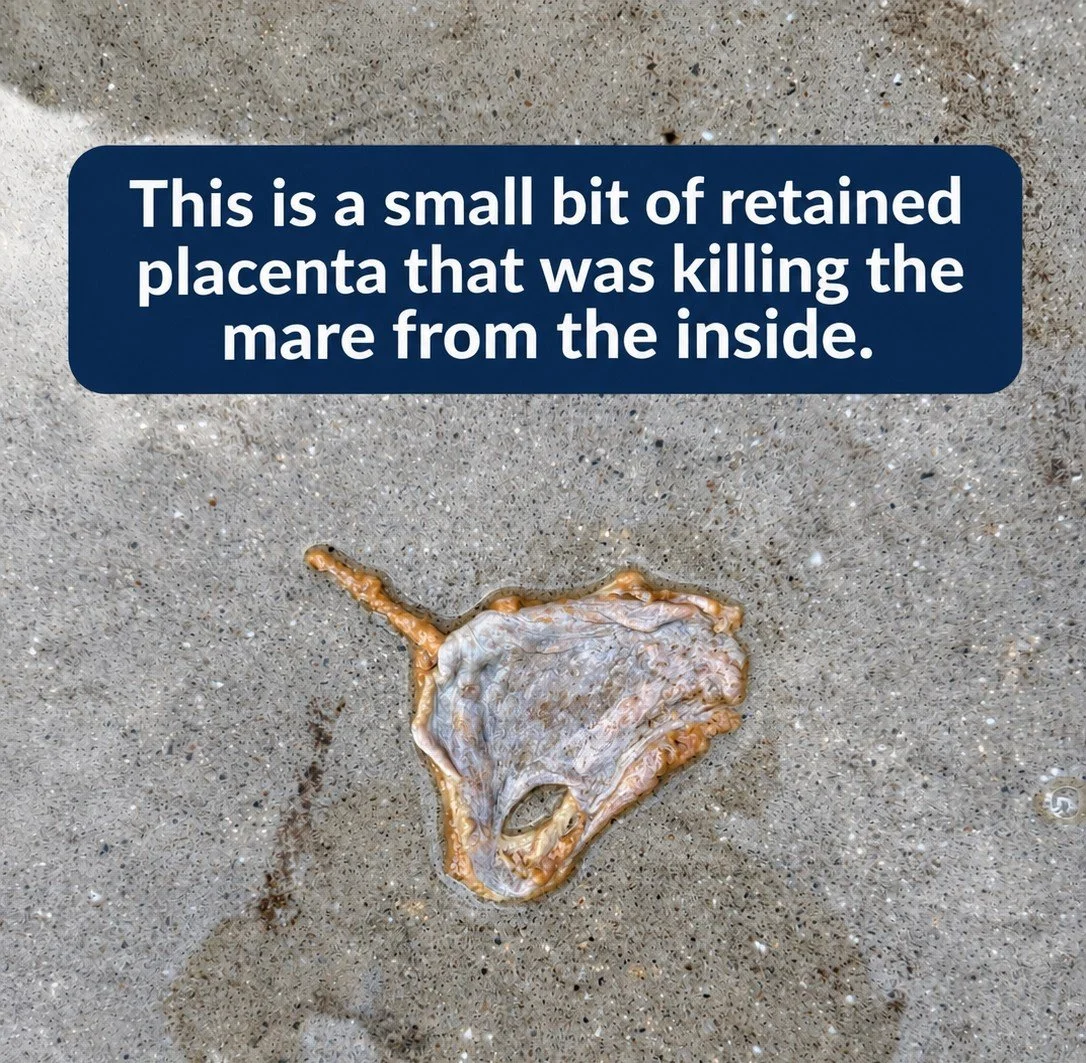
Why retained fetal membranes are deadly
After foaling, the placenta should be passed within 3 hours. Anything beyond that is classed as retained. In mares this is a genuine emergency — not a "wait and see."
Why is it dangerous?
The equine placenta is diffuse — it's interlocked with the entire lining of the uterus, not detached at one disc like in humans or cows. When it doesn't come away, that tissue starts to break down inside the uterus. That means:
Toxins are absorbed into the bloodstream
Bacterial contamination takes hold fast
The mare develops metritis → endotoxaemia → laminitis → sepsis
Mares go downhill quickly. Endotoxaemia also puts them at serious risk of laminitis, which can end their life.
Golden Rule Post Foaling:
The placenta gets laid out flat and checked. Every horn, every tip. It should look like an H — and it should be the whole H.
An example of a recent hospital case:
A mare presented with the above condition. She was quietly deteriorating at home without any obvious signs. When she came to the clinic she was dehydrated with signs of severe toxaemia. She spent the weekend with us on an intensive treatment plan; we were lucky enough to send her home fit and well — but it could very easily have gone the other way.
How did we treat her:
Broad spectrum anti-biotics
Anti toxin medications
Oral fluid therapy
Intensive uterine flushes with oxytocin 3 times per day
The takeaway message:
Check it, lay it out, and if you're not sure — call us.
Central Lakes Equine | When it matters, we're here.