
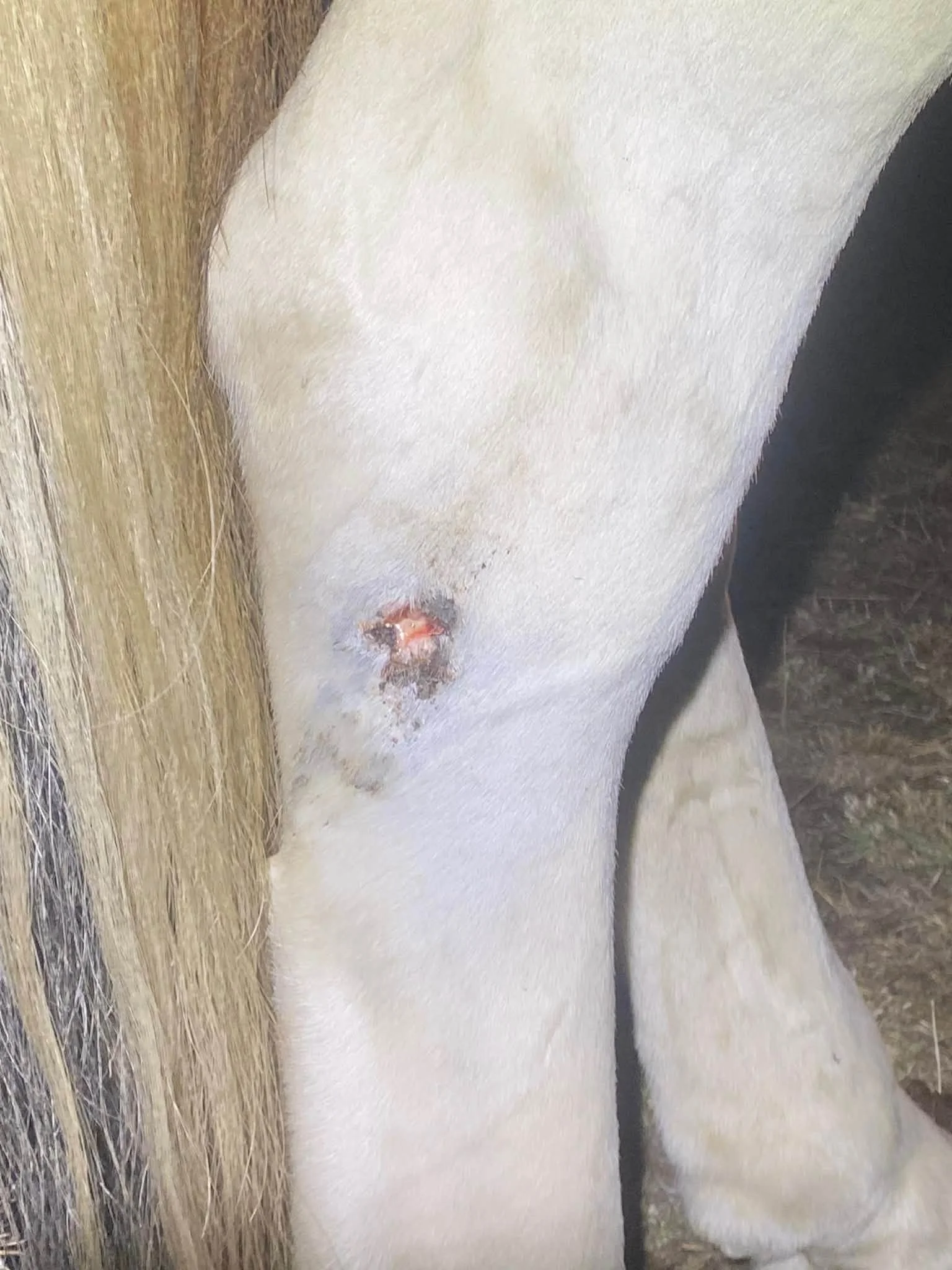
Sometimes it isn’t the size of the wound that worries us; the smallest of wounds can become the most challenging to treat.
The photo below shows a small puncture wound to the hock which is causing no lameness and should have healed well as the horse received appropriate care initially. Sadly, this small wound would not heal and kept discharging.
𝙁𝙪𝙧𝙩𝙝𝙚𝙧 𝘼𝙨𝙨𝙚𝙨𝙨𝙢𝙚𝙣𝙩 𝙤𝙛 𝙩𝙝𝙚 𝙒𝙤𝙪𝙣𝙙:
Radiographs show some fragments of devitalised bone. This bone needs removing!
𝙃𝙤𝙬 𝙙𝙤 𝙬𝙚 𝙩𝙧𝙚𝙖𝙩 𝙩𝙝𝙞𝙨?
Under heavy sedation and sterile conditions, we use radiographs to guide a special sterile bone curette to remove the damaged bone.
The second step is to use a pressure pump to flush the wound with sterile water and remove the last bits of debris.
We wish this lovely girl a speedy recovery!
𝙒𝙤𝙧𝙧𝙞𝙚𝙙 𝙖𝙗𝙤𝙪𝙩 𝙖 𝙝𝙚𝙖𝙡𝙞𝙣𝙜 𝙬𝙤𝙪𝙣𝙙?
Don’t wait for lameness to appear. If you notice persistent discharge, unusual swelling, or a wound that just won't close, give us a call! We’re here to help ensure your horse gets back on track.