
With winter just around the corner, it’s time to start thinking about preparing our horses’ feet. While we often dread the wet, muddy months, a bit of mud isn’t all bad — it can actually have some surprising benefits!
Did you know?
Mud that packs into the soles of your horse’s feet can act like natural sole support, helping to encourage and maintain healthy sole thickness.
But it’s not all positive… here are a few things to watch for in wet conditions:
Slippery surfaces: Consider removing any pre-existing pads, especially from hind feet, to reduce the risk of slipping.
Thrush: Look out for a dark, smelly discharge around the frog.
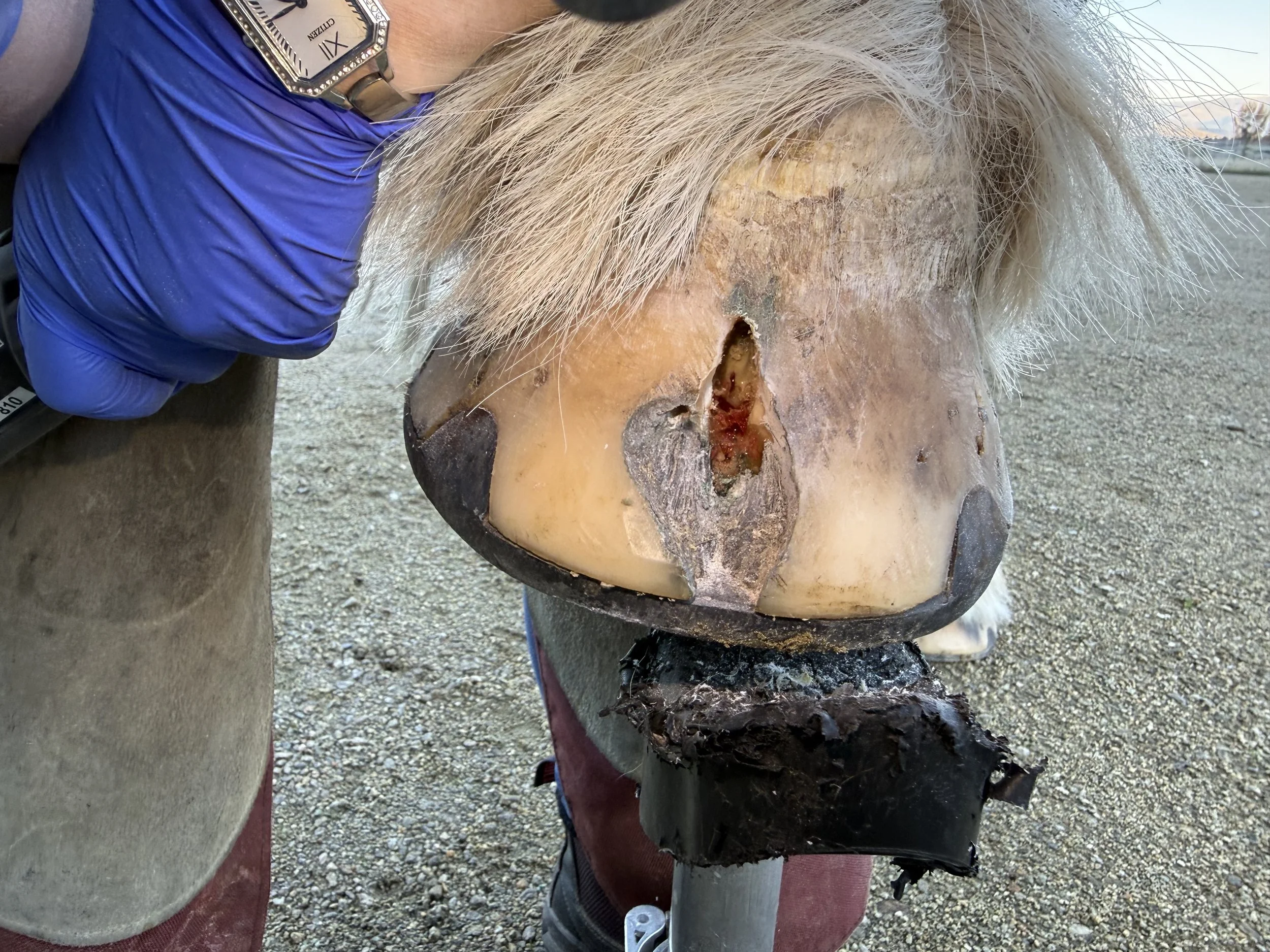
Seedy Toe: Horses prone to this can worsen in damp conditions — small stones can also creep in and cause problems: See the photo on todays post of an advanced seedy toe lesion Becci treated
Shoes On or Off?
There’s no one-size-fits-all answer — it depends on your horse and the ground conditions.
On stoney ground, weak hoof walls can crack without protection.
Horses with soft soles or prolapsed frogs may be uncomfortable barefoot.
If your horse has strong, healthy feet and is on soft footing, a barefoot break can be beneficial.
Client Question of the Month
“My horse has wedge pads on her hind feet — should I remove them for winter?”
Answer:
It depends on the foot balance your farrier has achieved. The best way to know for sure is with radiographs — they show how the angles have changed over the season
Tip: Wedge pads should ideally be a temporary measure until they’re no longer needed.
In summary: Keep an eye on hoof health this winter, and when in doubt, chat with your vet or farrier