
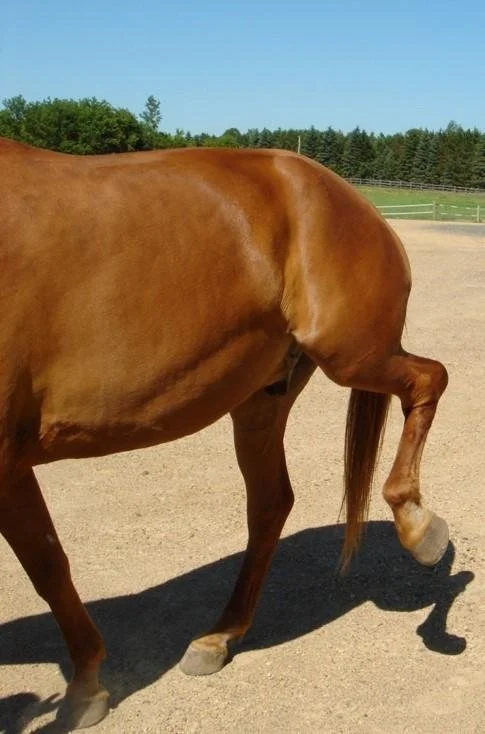
Have you ever noticed your horse struggling to back up, lifting a hind leg and holding it strangely in the air, or trembling unexpectedly? These could be signs of Shivers, a progressive neurological condition that affects movement and coordination.
Shivers is caused by damage to specialized nerve cells (Purkinje cells) in the brain. Clinical signs usually appear before five years of age, and geldings and taller horses are more commonly diagnosed.
The hallmark of Shivers is an abnormal gait when backing up. Horses may hyperflex a hind limb—lifting it and letting it tremble—or hyperextend, placing the foot further back than usual. Many horses also resist having their hind feet picked up for cleaning or farrier work. Over time, muscle loss in the thighs can lead to hindquarter weakness and stress or excitement can make episodes more noticeable.
There’s currently no cure for Shivers, but affected horses can often continue to train and perform, especially if the condition is mild. Management focuses on consistent exercise, turnout, and limiting stall time. Identifying and avoiding each horse’s personal triggers, reducing stress, and sometimes supplementing with vitamin E and selenium can also help. Sedation may even be used during farrier visits to make hoof care safer and easier.
While Shivers can be challenging, early recognition and careful management allow many horses to live comfortable, active lives.
If you notice unusual hind limb movements or changes in your horse’s gait, contact us at Central Lakes Equine at to schedule an appointment!