
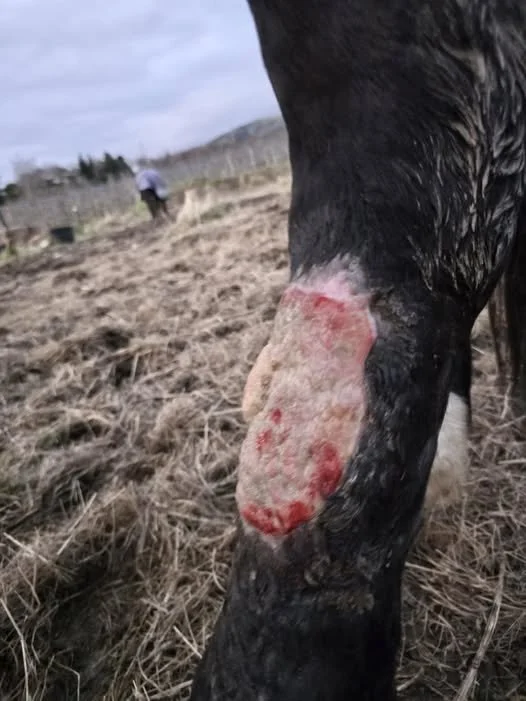
Horses are particularly prone to developing exuberant granulation tissue, commonly known as proud flesh, especially in wounds affecting the distal limbs. Unlike many other species, equine wounds below the carpus and hock have limited soft tissue coverage, reduced local blood supply, and are subject to constant motion and contamination, which are all factors that complicate normal healing.
When inflammation is prolonged or epithelialisation is delayed, granulation tissue can proliferate beyond the wound margins. Once proud flesh forms, it physically prevents skin migration across the wound surface, further delaying closure and increasing the risk of chronic, non-healing wounds.
Key contributing factors include:
• Distal limb location
• Excessive motion or tension at the wound site
• Infection or repeated contamination
• Inadequate wound management or delayed intervention
Early, appropriate wound care is essential to minimise complications. This may include timely debridement, careful bandaging to control inflammation, and veterinary assessment to guide topical or surgical management where required.
If your horse sustains a wound, especially to the lower limb, early veterinary involvement can make a significant difference to the healing outcome.