
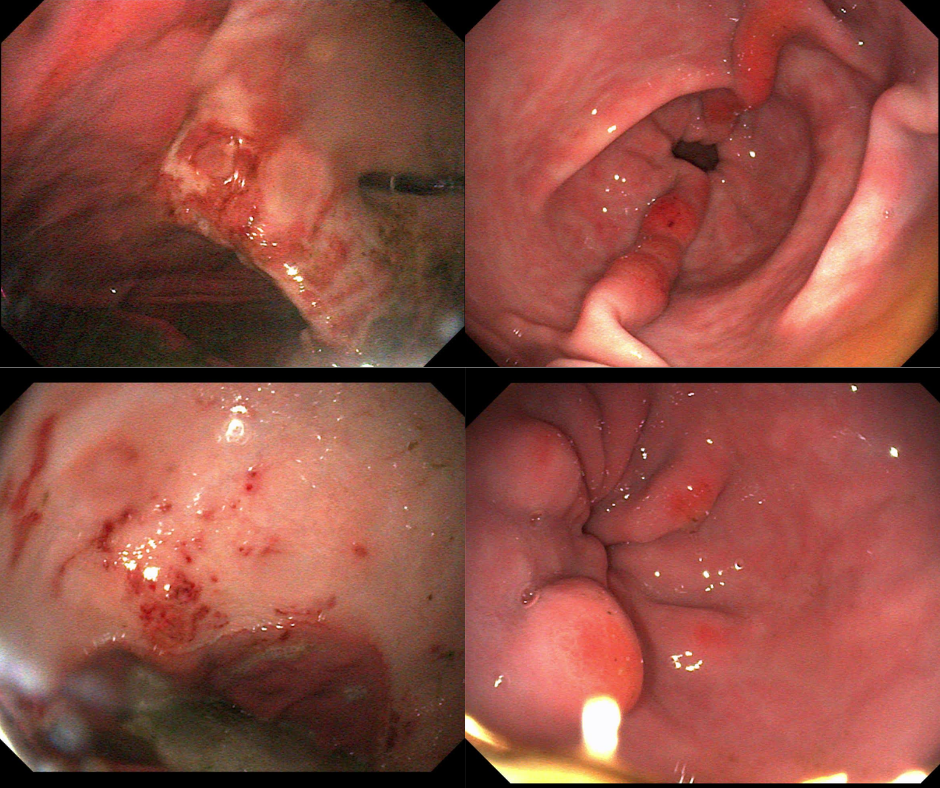
Not all gastric ulcers are the same, and that matters when it comes to treatment.
Glandular gastric ulcers occur in the lower part of the horse’s stomach, where acid is supposed to be present. These ulcers aren’t caused simply by too much acid, but by a breakdown in the stomach’s protective lining and blood flow, often influenced by stress or management factors.
Ulcershield (omeprazole) works by reducing acid production. It’s very effective for squamous ulcers (the upper, non-glandular portion of the stomach). However, acid suppression alone does not address the underlying problem in glandular ulcers (the damaged protective mechanisms of the stomach lining).
That’s why many horses with glandular ulcers don’t improve on Ulcershield alone or relapse quickly when it’s stopped. Successful treatment usually requires a different approach, often including sucralfate which coats and protects the stomach lining and supports healing.
Why gastroscopy is so important:
Gastroscoping is the only way to know:
• Whether ulcers are present
• What type of ulcers they are (squamous vs glandular)
• How severe they are
• Whether treatment is actually working
Treating ulcers without scoping is often guesswork, and that can lead to the wrong medication, delayed healing, unnecessary expense, and frustrated horses and owners.
Bottom line: If a horse isn’t responding to Ulcershield, it doesn’t mean ulcers aren’t the problem, but it may mean they’re the wrong type of ulcers being treated the wrong way.
If you suspect gastric ulcers, talk with us about gastroscopy and a targeted treatment plan. Getting eyes on the stomach makes all the difference.